burun wrote:Actually, I don't know why I need an actual baritone.
I just thought having a bari length neck would make it easier for me to get the low low.
Just up the gauge.
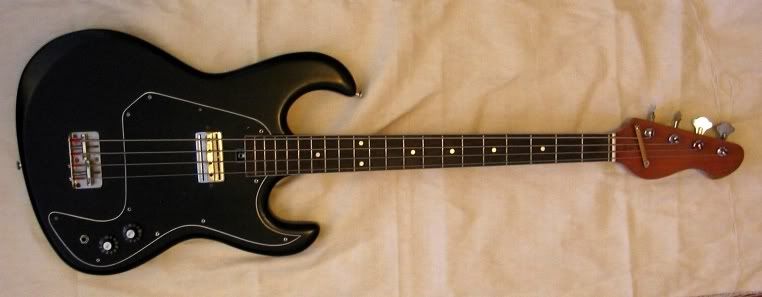
Think of it like a short scale bass or guitar.
A standard bass is 34". If you use a short scale (30") just go up a gauge to get a similar feel.
Same with guitar - if you favor Mustangs or Musicmasters, and play 10's on a standard guitar, a set of 11's will give you almost the same feel. Using 10's on the shorter guitar may cause you to overbend a little.
And that's just it - a shorter scale means you're more likely to fret less precisely. Pull a note down a quarter of an inch on three different scale length guitars and you'll notice that the shorter the scale, the more the pitch will increase for the same bend.
That's why Mustangs sound "indie" and like Pavement. It's also why short scale basses don't always record well (you can hear notes go a little sharp if you play hard). Part of the "precision" in P-Bass is tied in with this concept.
The way you solve this problem is to make the strings harder to accidentally bend sharp as you play. The added bonus is that thicker strings sound heavier. I play a Mustang bass live, and up up-gauged by two. People say that Mustang basses are weak and thin sounding, but when they hear mine set up, they don't say that anymore.
With this in mind, if you are making a guitar "Baritone-ish," just make sure the strings aren't floppy by picking the right gauges. Play a real baritone, determine if you like the feel, go up a gauge, and string your standard guitar with your crazy custom set.
And considering the fact that you are doing this at all, what's wrong with a "happy accident anyway?"
Start with a $50 guitar if you want, and take it from there.
And yes, please use a Hello Kitty or Batz Maru Fender for all of your final experimental rigs.
-A